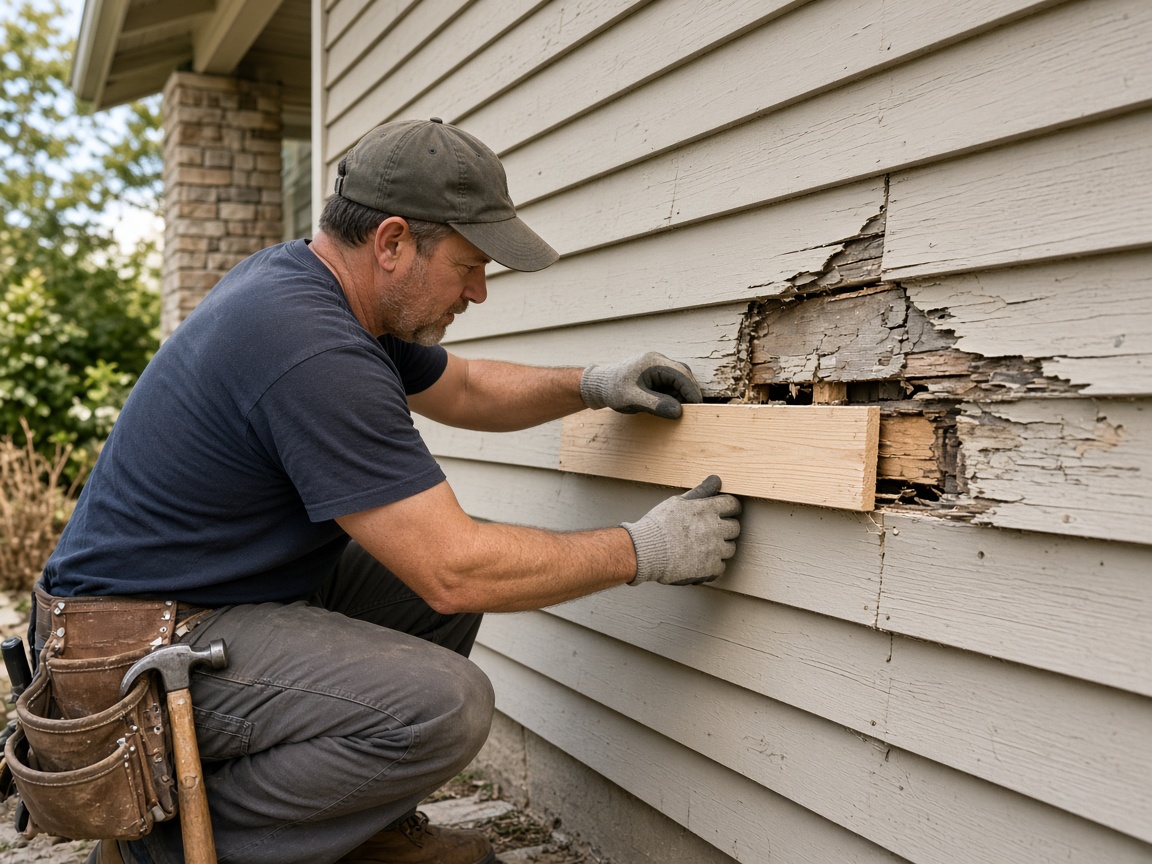
Cedar Park homes in neighborhoods like Brushy Creek and Twin Creeks often feature wood siding installed 15 to 30 years ago on single-family houses built during the area's growth spurt. The humid subtropical climate brings prolonged moisture that penetrates seams and corners, especially on north-facing walls shielded from direct sun. Providers familiar with Williamson County construction know to check for hidden decay at the base of boards where soil splash from summer storms reaches the foundation line, a common issue near the Brushy Creek Regional Trail greenbelt.
Hot summers accelerate paint failure and cupping on exposed elevations, particularly in areas around Cedar Park Town Center where newer infill homes sit close to older stock. Local providers match species such as cedar or pine to existing material while accounting for expansion gaps needed in this climate. They also address transitions where wood meets brick or stucco accents common in Leander-border homes, preventing water intrusion at those joints that standard repairs often miss.
When connecting with providers for wood siding repair, expect attention to code requirements for fire-rated materials in certain Williamson County zones and proper flashing integration around windows that see heavy runoff during intense summer downpours.
Technician insight
In Cedar Park, the thing that catches most people out with Wood Siding Repair is how our humid subtropical summers let moisture wick up behind boards on north walls in older Brushy Creek homes, turning a small paint blister into full rot before homeowners notice.
Hidden Rot on Twin Creeks Home
A homeowner noticed peeling paint on south-facing cedar siding after a wet spring. Providers found extensive rot along the bottom course where splash from summer storms had reached the wood near the foundation. They replaced the affected boards, added improved flashing, and sealed the area to match surrounding material. The siding now sheds water properly without further decay.
How it works
- 1
Initial Assessment
Providers evaluate visible damage, probe for hidden rot, and note exposure patterns typical to Cedar Park's humid conditions.
- 2
Material Matching
They select compatible wood species and finishes that withstand local heat and moisture cycles.
- 3
Targeted Repair
Damaged sections are replaced or restored with attention to expansion gaps and flashing at transitions.
- 4
Final Protection
Sealing and finish application protect against future humidity and summer UV exposure.
Pricing
Costs depend on damage extent, wood type, and access; providers supply upfront quotes after inspection.