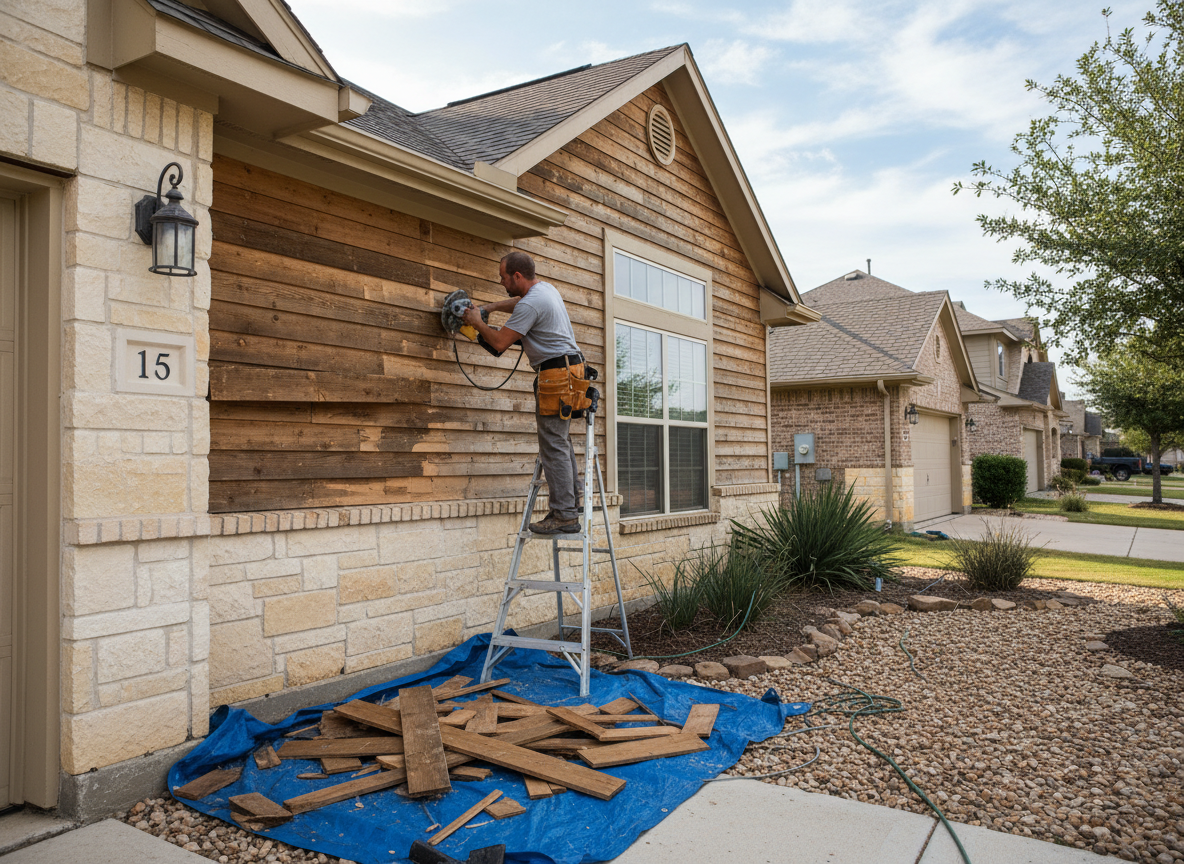
Cedar Park homes in areas like Brushy Creek and Twin Creeks often feature vinyl or fiber cement siding installed during the 1990s and early 2000s expansions. Hot summers combined with high humidity accelerate fading, warping, and sealant breakdown, especially on south-facing walls near the H-E-B Center at Cedar Park. Providers we connect you with routinely inspect for hidden moisture behind panels where poor drainage from the gently rolling terrain allows water to pool against foundations.
Wind-driven rain from occasional storms can force water under trim at window and door edges in Downtown Cedar Park properties. Matching existing profiles and colors requires sourcing from suppliers familiar with regional stock, since older sections near Cedar Park Public Library may no longer be manufactured. Independent technicians check for underlying sheathing damage before any surface fix, because skipping this step leads to repeated callbacks when summer heat expands compromised wood.
Proximity to Austin and Round Rock means many Cedar Park residences sit on lots with mature trees whose roots and leaf litter affect grading around the house. Providers assess soil movement in Williamson County clay that shifts with seasonal moisture changes, which can pull siding away from corners. They also verify proper flashing integration at rooflines to prevent leaks that travel down interior walls during heavy summer downpours.
Technician insight
In Cedar Park, the thing that catches most people out with Siding Repair is how our clay-heavy soils and summer humidity combine to push older vinyl away from corners on 1990s homes in Brushy Creek. Homeowners often treat surface cracks without checking the sheathing behind, which then fails the next time a storm rolls through from the northwest.
Corner Panel Failure Near Twin Creeks
A homeowner in Twin Creeks noticed buckling at the southeast corner after several hot, humid weeks. The connected provider found water trapped behind the vinyl due to shifted soil grading. They replaced the affected panels, improved flashing at the base, and restored drainage away from the foundation. The siding now withstands expansion without recurring gaps.
How it works
- 1
Initial Assessment
A connected provider visits the property in Cedar Park to document damage extent, note siding type, and check for moisture issues common in humid conditions.
- 2
Material Matching
They source replacement pieces that align with existing profiles used on homes in Brushy Creek or Twin Creeks to maintain visual consistency.
- 3
Targeted Repair
Sections are removed, underlying issues addressed, and new material installed with attention to local drainage patterns and heat expansion.
- 4
Final Inspection
The provider reviews the completed work for weather tightness before leaving the site.
Pricing
Costs depend on damage scope, material type, and access; obtain quotes directly from connected local providers.